

Design That Works as Beautifully as It Looks
When joinery is done well, you barely notice it – because it simply belongs to the architecture.
It doesn’t announce itself.
It doesn’t compete for attention.
It simply belongs.
That’s because exceptional joinery isn’t decoration – it’s architecture in disguise. It shapes how a space functions, how it feels to move through, and how calmly everything comes together.
In my work, joinery is never treated as an afterthought. It’s designed early, alongside layout, circulation, and proportion, so it becomes an integrated part of the architecture rather than something applied later.
Begin Here: Schedule a free architect-led review to see how integrated joinery can harmonize your space.
When Joinery Is Designed, Not Just Installed.
Joinery designed without a broader architectural lens often looks fine on day one – but it rarely ages well.
Why?
Because it hasn’t been considered in relation to:
- ceiling lines
- wall proportions
- door alignments
- lighting
- circulation paths
When joinery is designed architecturally, it does more than provide storage. It brings order. It reduces visual noise. It creates rhythm and restraint.
This is where intelligent design quietly elevates a space.
PROJECT INSIGHT
Joinery That Shapes the Experience
This is where the real difference lies – not in what you see at first glance, but in what holds the joinery together over time.
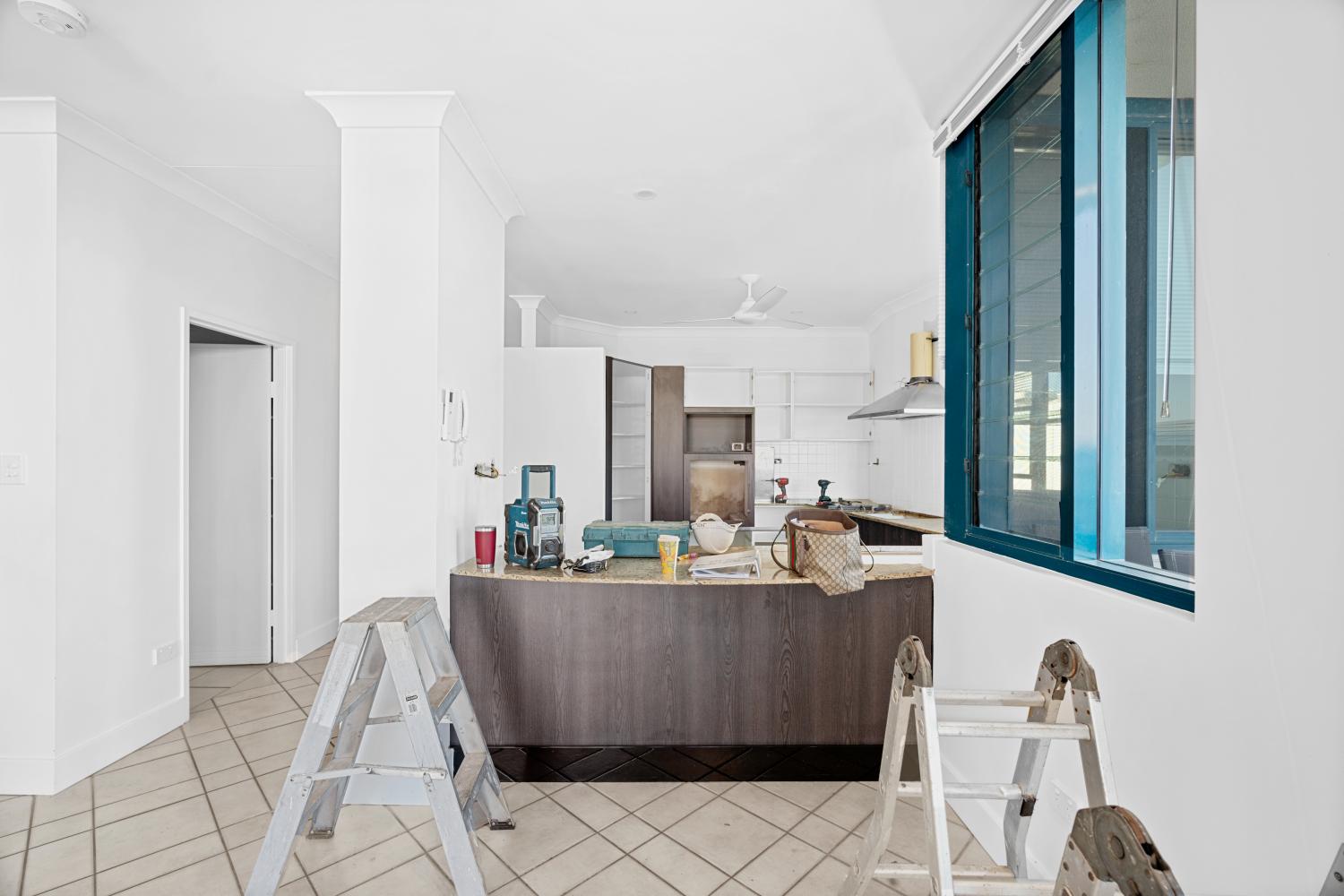
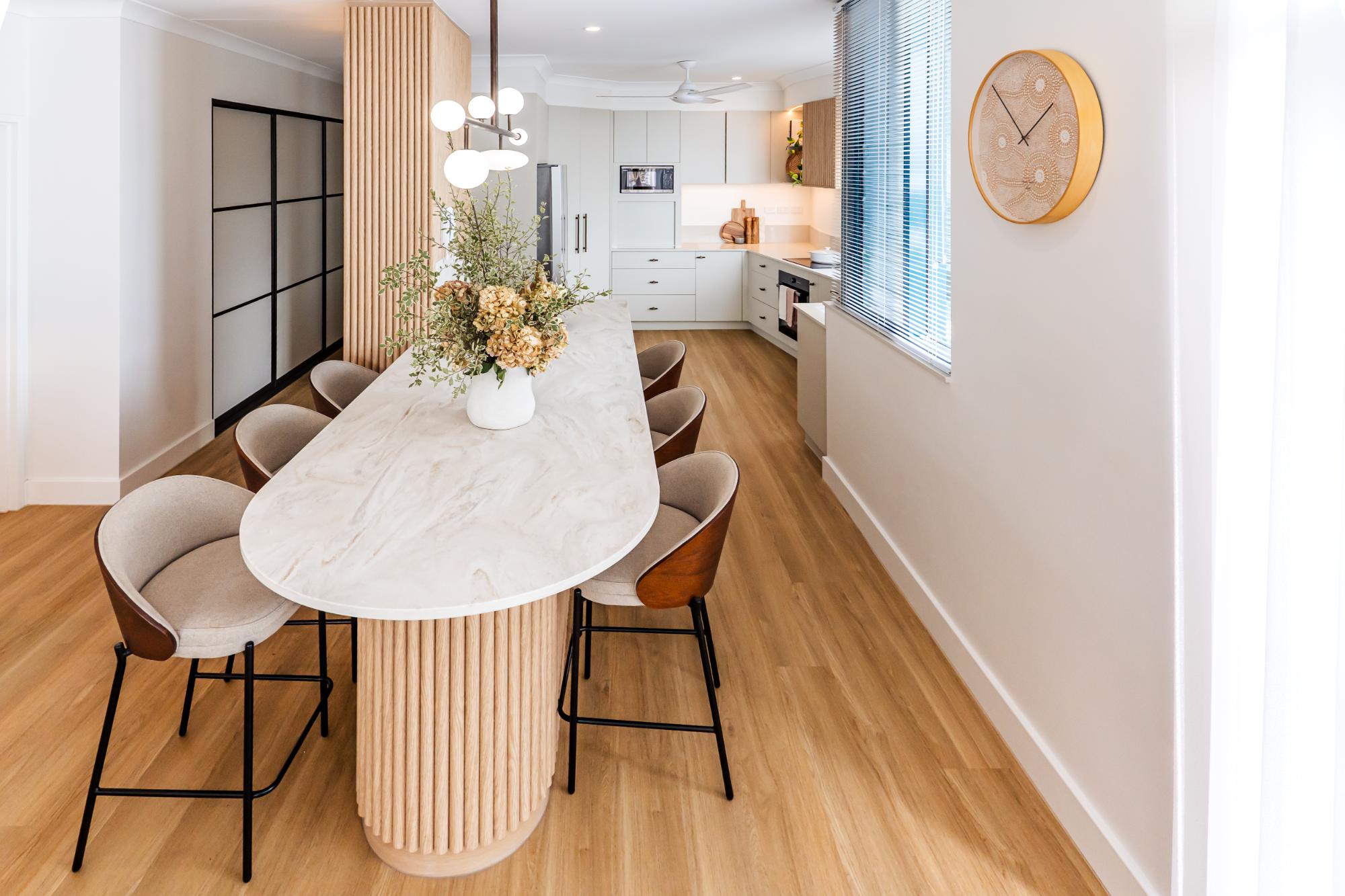
In the before image, a vertical pillar sits awkwardly between the kitchen zones, interrupting sightlines and circulation.
The architectural solution wrapped the pillar in half-round timber strips, transforming it from a visual interruption into a sculptural feature. The timber follows the column’s curvature, creating a continuous line that ties together the cabinetry, island, and work zones.
The result is a warm, tactile surface that softens hard edges, adds texture, and subtly guides movement through the space. The timber wrap also introduces controlled play of light and shadow across the rounded profile, enriching the kitchen’s material language without overpowering it.
This approach demonstrates how a simple architectural choice – turning an obstacle into an opportunity – can unify elements, enhance acoustics, and contribute to a calm, enduring interior.
Design notes (why this works)
- Material choice: timber 1/2 rounds creates warmth and a tactile signature that complements timber cabinetry.
- Form language: follows the pillar’s curvature to establish a continuous architectural line.
- Spatial impact: unifies the kitchen’s zones, improves sightlines, and subtly guides circulation.
- Practicalities: ensure proper sealing and heat/moisture considerations; plan joints to resist wear and maintain clean lines.
- Aesthetic outcome: adds texture and depth without competing with the overall kitchen palette.
- Pillar gave us the opportunity to have a feature sculptural wall light to the hall way.
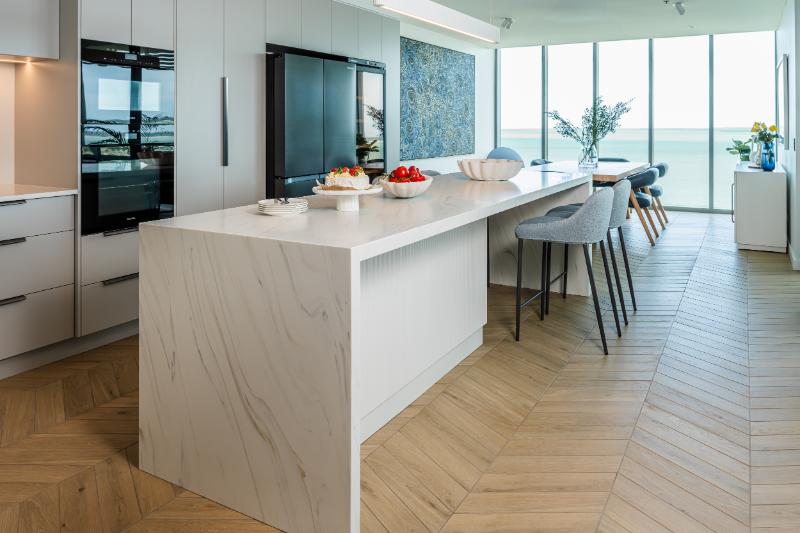
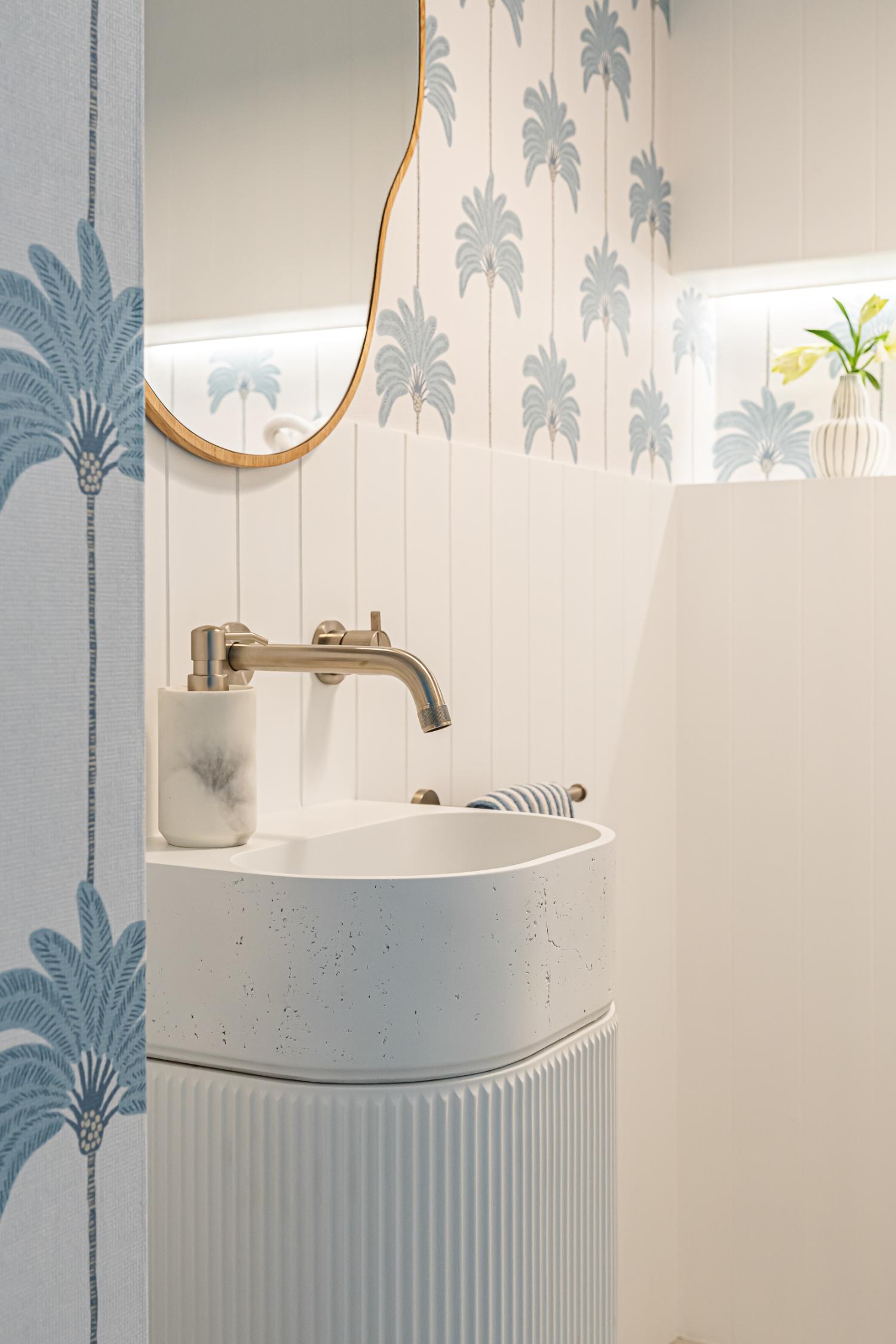
In this project, joinery was used to define and elevate the open-plan living environment, extending beyond the kitchen to shape how the entire space is experienced.
Rather than treating each zone as separate, the joinery was designed as a continuous architectural language – aligning proportions, materials, and detailing across kitchen, living, and transition spaces. The result is a cohesive environment that feels calm, resolved, and intentional from every angle.
This is where joinery moves beyond function and becomes part of the architecture itself.
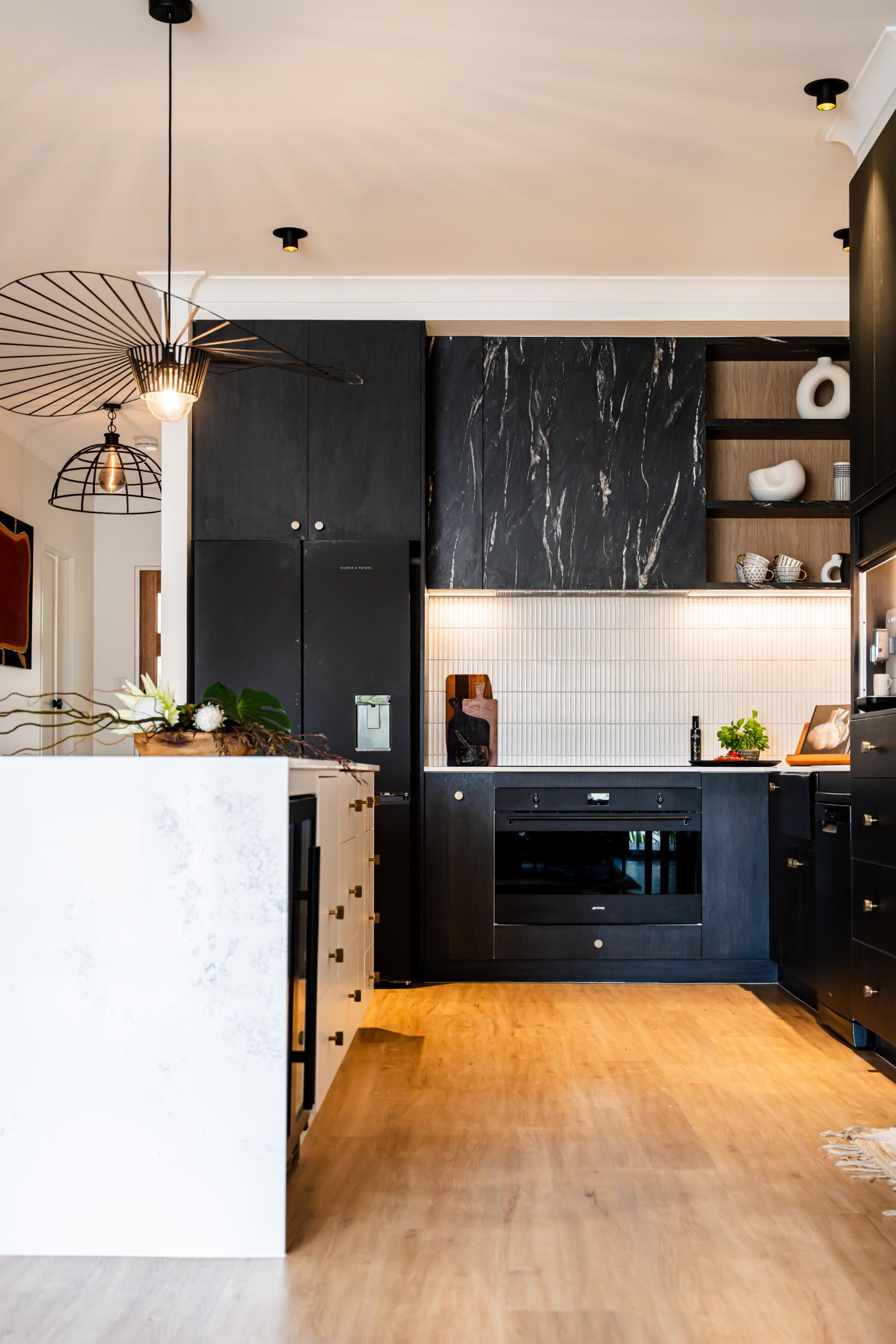
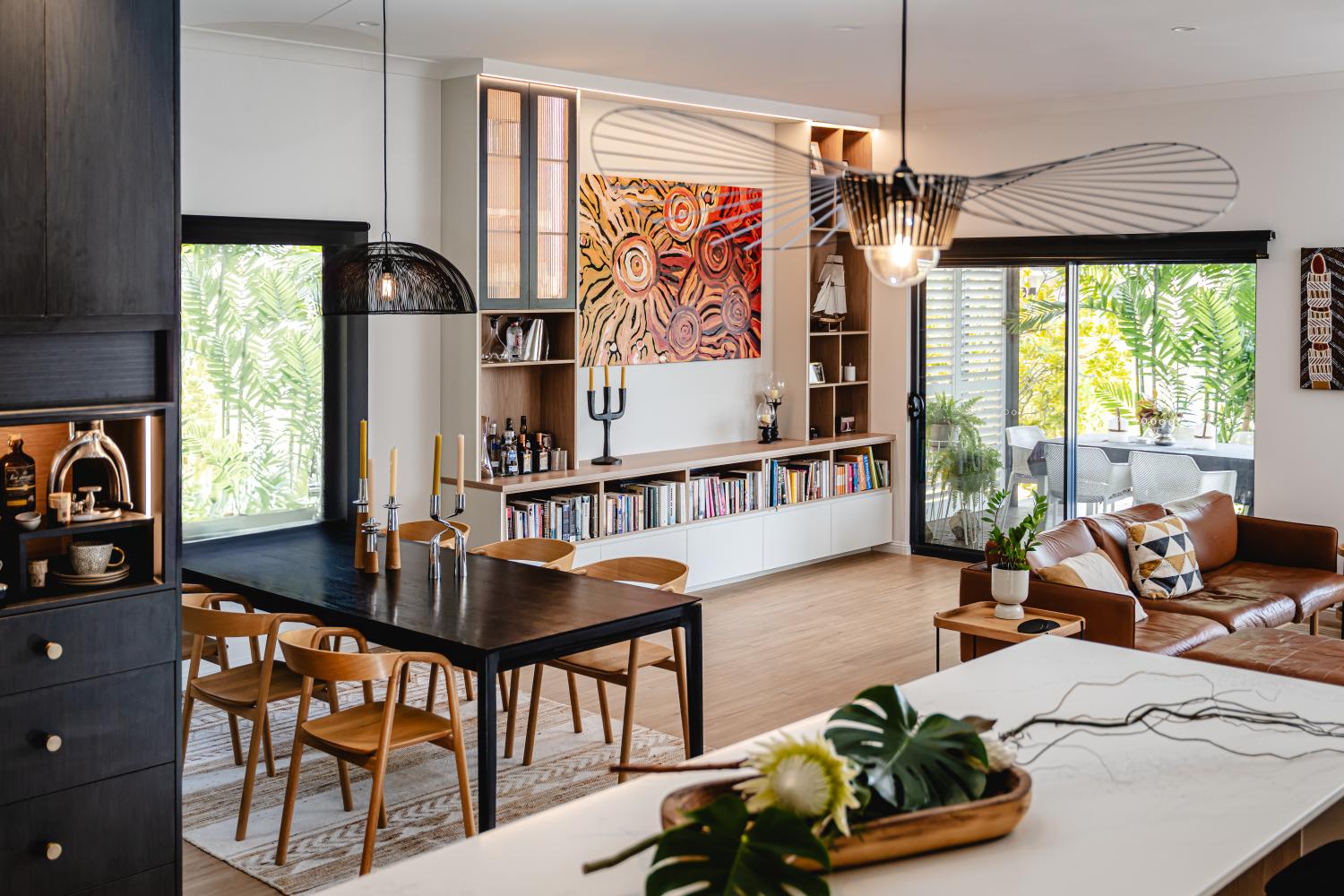
At Fanning Drive, joinery played a central role in reshaping the open-plan living and kitchen areas, bringing clarity and structure to the space.
Integrated storage, considered proportions, and refined detailing allow the joinery to quietly organise the environment – reducing visual noise while supporting how the space is used day to day.
Rather than standing apart, the joinery is embedded within the architecture, creating a space that feels both elevated and effortless to live in.
Intelligent Joinery Is About Restraint
Great joinery isn’t about adding more.
It’s about knowing what not to add.
Handled correctly, joinery:
- simplifies a space
- controls sightlines
- supports movement
- allows hero materials to shine
This restraint is what allows a space to feel timeless rather than trend-driven.
Beauty That Works Hard Behind the Scenes
Joinery carries more responsibility than most people realise.
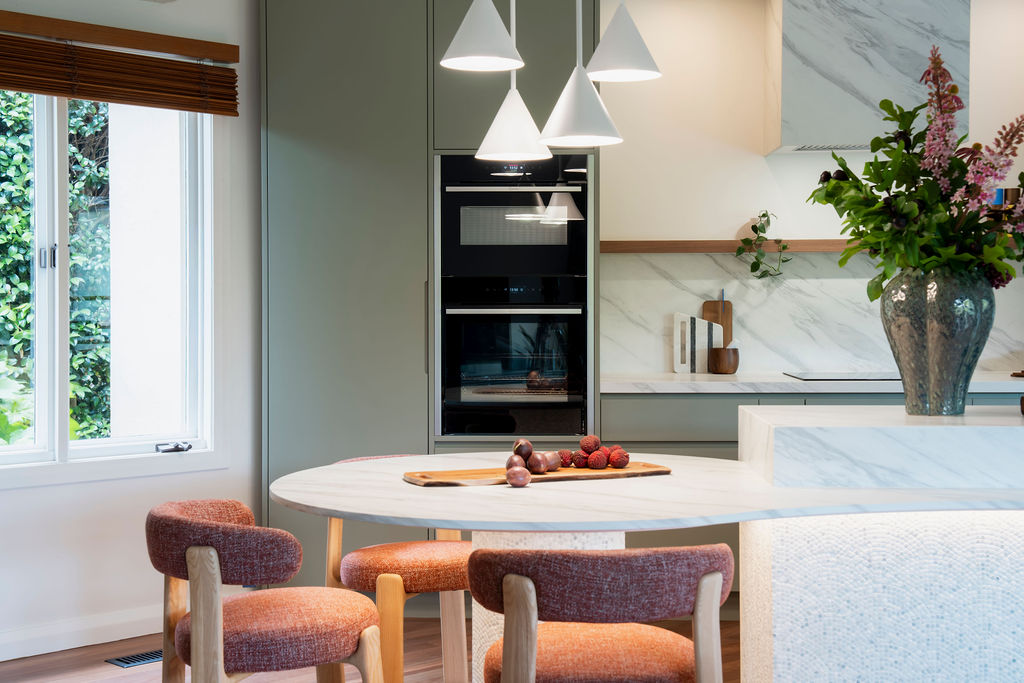
It houses appliances.
It manages storage.
It absorbs wear.
It supports lighting and electrical planning.
When these elements are resolved early, the joinery works quietly in the background – supporting daily life without demanding attention.
This is where intelligent design proves its value.
Joinery That Lasts Beyond Trends
Trends come and go.
Good architecture endures.
Design-led joinery is about longevity – not just in materials, but in relevance. When proportion, alignment, and function are resolved properly, the space continues to feel right long after the initial excitement fades.
That’s the difference between joinery that photographs well and joinery that lives well.
Designing Joinery as Part of the Whole
Joinery should never be designed in isolation. It must respond to:
- the architecture of the home
- how the space is used
- the climate
- and the lifestyle of the people living there
At JMJ Interiors, joinery is designed as part of a complete vision – ensuring every detail works together seamlessly.
Begin with Architecture, Not Cabinetry
If you’re planning a renovation or new build and want a space that feels calm, cohesive, and enduring, joinery needs to be considered early – and designed with intent.
That’s where architecture-led design makes all the difference.